

As Mexico City turns to the axolotl for its World Cup image, the endangered amphibian's colorful rise is stirring debate over conservation, spending and urban identity.
by Xinhua Writer Tan Huiting
MEXICO CITY, June 4 (Xinhua) -- The mascot of Mexico City's World Cup makeover is a little bit unusual: It is a small endangered amphibian with an adorable smile called the axolotl.
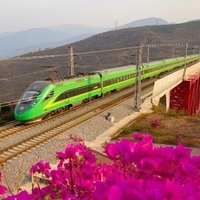
Ahead of the 2026 World Cup, the Mexican axolotl has spread across the capital's public spaces in shades of purple, yellow and pink. Pedestrian bridges have been repainted, underpasses covered with giant murals, and a light-rail train serving areas near Mexico City Stadium transformed into a pink axolotl known simply as "The Axolotl."
At first glance, the choice seems obvious. The axolotl is unmistakably Mexican, visually distinctive and already familiar to many foreign visitors. Yet in Mexico City, where the real animal is struggling to survive in the fragile waterways of Xochimilco, its sudden rise as a World Cup symbol has also sparked a broader debate.
Native to central Mexico, the axolotl is one of the country's most recognizable species. Unlike most amphibians, it retains juvenile features into adulthood, including a rounded face, wide eyes and feathery external gills that give it an almost cartoon-like appearance.
In Mexican mythology, the axolotl is linked to Xolotl, the underworld god and twin brother of Quetzalcoatl, the feathered serpent deity. In modern Mexico, it has become both a cultural icon and a symbol of conservation.
Its image appears on tourist buses and Mexico's 50-peso banknote. Chapultepec Zoo in central Mexico City has an axolotl facility that combines public viewing with breeding work. The capital also has a dedicated axolotl museum, which provides a habitat for the species and organizes conservation activities.
Now the animal is also part of the city's World Cup look.
On a recent drive toward the city center, the transformation was impossible to miss. Pedestrian bridges appeared in coordinated purple and yellow, while giant axolotl murals brightened underpasses along Paseo de la Reforma, one of the city's main avenues. Some road surfaces even featured axolotl-themed designs. The effect was festive, vivid and slightly surreal.
Some Mexicans summed it up in two words: "Todo morado" -- "Everything is purple."
The phenomenon has acquired its own local nickname: "ajolotizacion," or "axolotlization," referring to the city's effort to turn public spaces into an axolotl-themed World Cup landscape. What sounds playful has also become shorthand for a wider discussion over public spending, urban aesthetics and environmental priorities.
In the rainy season, Mexico City often wakes to strong sunshine and ends the day under sudden showers, sometimes even hail. Tropical vegetation grows dense and green. Against that backdrop, the purple, yellow and pink axolotl decorations lend parts of the city a theatrical brightness, as if the World Cup had arrived first as a color scheme.
Alongside the city's visual makeover, preparations have also extended to infrastructure improvements. In March last year, the city government launched a campaign to repair more than 200,000 potholes, followed by a multi-billion-peso road maintenance program covering major road corridors. The effort includes resurfacing, emergency repairs and nighttime construction.
The World Cup has expanded the notion of tournament infrastructure beyond stadiums. Roads linking airports, hotels, stadiums and tourist districts have become part of the host city's presentation to visitors.
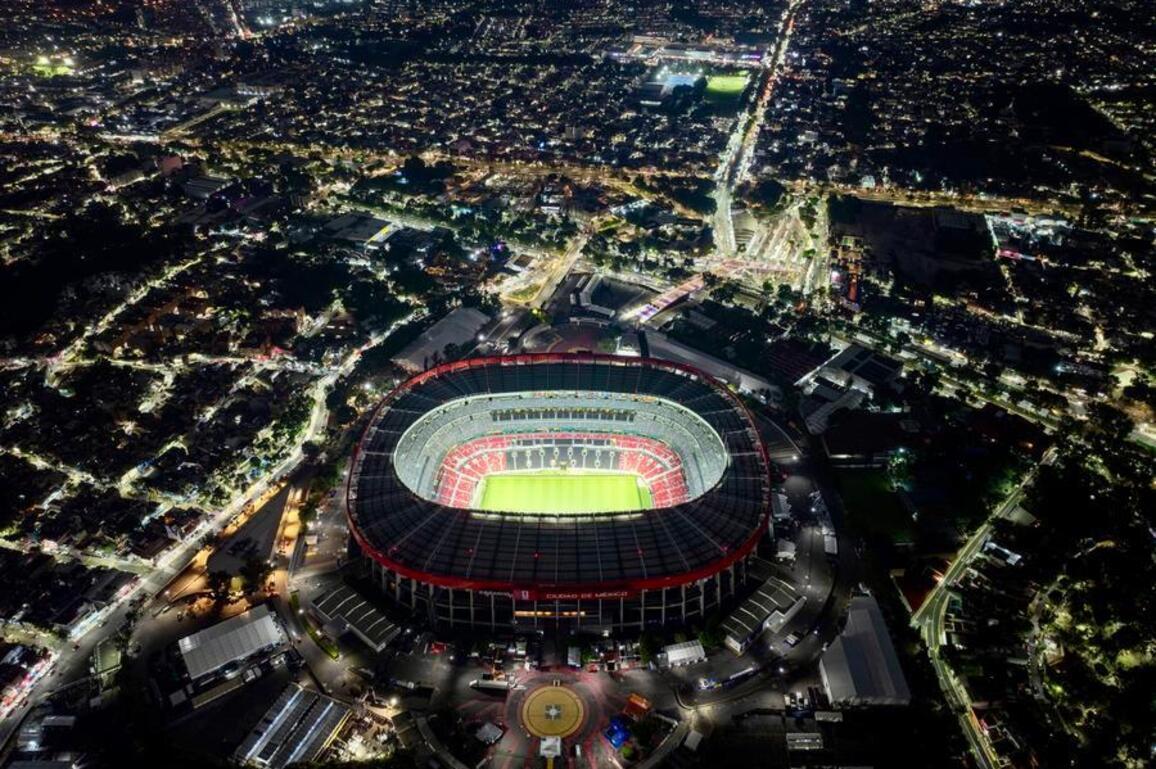
Around Mexico City Stadium, where the opening match will be played in less than 10 days, roads have been resurfaced and public spaces upgraded. City authorities say hundreds of public works projects are underway across the capital.
City officials have presented the axolotl-themed campaign as part of a broader effort to improve public spaces ahead of the World Cup. Mayor Clara Brugada has also unveiled Ajolotin, a pink-crowned axolotl, as the city's official mascot for tournament-related activities.
Near Mexico City Stadium, authorities have installed a roughly three-meter-high axolotl statue wearing the Mexican national team's jersey. The figure quickly became a popular attraction for football fans attending Liga MX matches.
Even that symbol, however, has become complicated. The city has removed the status because of too many people taking photo with it, which caused traffic and other issues. The mayor recently promised that "it will come back."