

Julian McBride
Download PDF
Aug 16 2025
6
viewstbtb/DepositphotosChina is adopting a deliberate and sustained approach to expanding its soft power and global influence. Eyeing a growingmilitarized foothold in the Indo-Pacific, China is taking a chessboard approach to the Russian invasion of Ukraine. Neither outright militarily backing Russia, condemning the invasion, nor voting in favor of the illegitimate annexations, China is taking a passive, yetcalculated approach. Wanting a fractured West, while simultaneously bringing Moscow under its fold, Beijing seeks to position itself as a legitimate superpower, promote multilateralism, and test the coalition of the willing if the Chinese government gives the green light for future military provocations in the Asian Pacific.
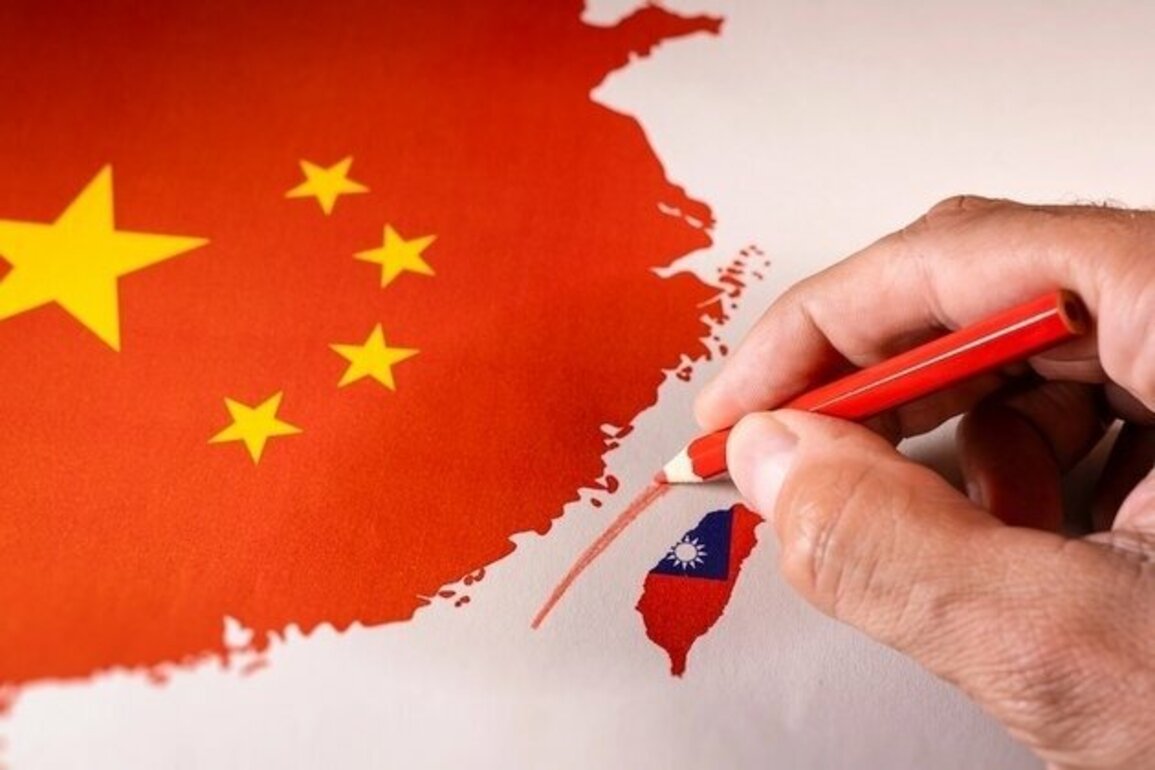
Amidst the ongoing war, Russia was internationally isolated, accumulating moresanctionsthan North Korea, and became increasingly reliant on economic aid and exports to China. During the numerous United Nations General Assembly resolutions against the war, occupation, and annexations, Beijing hasabstained numerous timesneither condemning nor supporting Moscows aggression. A major factor as to why China does not support Russias annexations openly is due to fears of the West changing its foreign policies on Taiwan. If Beijing were to openly back Moscow, Western countries could reconsider theOne China policyand provide further military and diplomatic support to Taiwan. Nevertheless, Beijing has seldom cracked down on Chinese companies thatsend critical componentsfor Russian weaponry,particularly drones. According to aJuly 2025 Bloomberg report, 92% of all drone components are of Chinese origin, and with Russias ongoing production, drones are playing a significant role on the frontlines.
The prolonged war has led toexhaustionin not just the Ukrainian and Russian militaries and society, but also in Western perception. The gridlock benefits China for several reasons. Russia is ahistorical rivalof China, and both countries have clashed throughout various governments, including the mid-1800s and the Cold War, over border disputes. Moscow occupies Outer Manchuria, a region thatBeijing has eyedfor return to the Chinese fold, much like Taiwan. Internationally isolated and under stringent sanctions, Russia is becomingincreasingly reliant on exports to China, as well as economic relief.
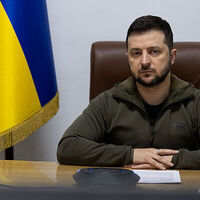
China has the soft power to shield Russia from international repercussions and, diplomatically, quietly supply components to continue the war. Nevertheless, Chinadoes notwant Russia to win outright, as an emboldened and victorious Moscow could potentially escalate provocations towards Beijing, or embolden Pyongyang even more, which the Chinese government views as a security issue along its borders. Simultaneously, Chinadoes notwant Ukraine to win outright and views Russia as a historical rival, albeit a de facto vassal, that is beneficial to Beijings growing international influence. The war has causedrifts amongst NATO members, with the height of conflict coming in a heateddiplomatic ambushby the Trump Administration against Ukrainian president Volodymyr Zelensky. The conflicts and diplomatic bickering amongst Western nations have benefited China, which, like Russia,conducts hybrid warfare operationsto cause dissent in American and European internal politics, which in turn leads to populist governments that Beijing would prefer to go toe to toe with.
Akin to Western nations, China is alsoassessing combat dataduring the Russian invasion of Ukraine, along with calculations towards potential future military operations. Russian and Ukrainian production rates haveincreased significantly, while those in theWest have lagged, and Chinese military planners are closely monitoring this development. Bureaucracy often leads to increased political gridlock in Western countries when it comes to defense and military confrontations, as democracy allows all voices, including those of opposition parties, to be heard. Russias forces had occupied Ukrainian territory since 2014, but true lethal aid and heavy weaponry did not come until the full-scale war, as the West was locked in gridlock.
China does not have to worry about bureaucracy or dissent over any military operation, as Beijing rules anauthoritarian one-party systemthatfrequently purgespoliticians and military officials over allegations of corruption and other charges. Like Russia and North Korea, China has the labor capacity to ramp up production in wartime and the authoritative measures to do so. Watching the West react slowly to defending Kyivs defense, Beijing could become more inclined to assess the level of assistance Taipei is currently receiving. The Chinese government paid close attention to the lack of urgency NATO showed as Russia built up the largest European invasion force since World War II over a six to eight-month period in 2021, only to attack in late February 2022. It was Ukrainian resilience and key terrain that helped incapacitate the initial Russian invasion force before heavy weaponry such as HIMARS and tanks came into the fold due to slow Western reactions.
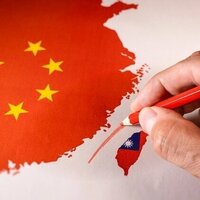
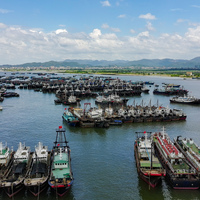
A Chinesenaval invasion force for Taiwanor a confrontation in theSouth China Seawill require an amphibious buildup not seen since D-Day andcould require a minimum a year to amass. Taiwan, the United States, and other Indo-Pacific countries would be able to detect the amphibious force through geospatial and human intelligence, as China will not be able to hide hundreds of thousands of troops amassed on their coastal bases. Like Russia, China will hope for a coalition of the unwilling rather than a willing coalition of countries that will demonstrate sufficient strength to deter the mainlands plans to unify Taiwan forcibly. Ukraines situation iscritical to deterring China, as Beijing is likely to reconsider its stance if the West provides Kyiv with thorough backing, security guarantees, and weakens and isolates Russia sufficiently.
Suppose European countries, such as the UK and France, are freed up after the Ukraine conflict and send carrier groups into the Indo-Pacific. In that case, China will also have to face a calculus of greater coalition support, as European countries havestepped up patrols in the region. Therefore, Beijing may entice Moscow to continue its imperial ambitions to keep key American and Taiwanese allies out of the Asian Pacific.
China generally favors a policy of neutral neutrality regarding the war in Ukraine. Beijing wants Moscow, Kyiv, and the West to exhaust themselves, while simultaneously hoping Washingtons global reputation fractures, especially as two administrations approach a Russian adversary in an arguably lukewarm manner. Assessing combat data, the willingness of Western populations to continue funding wars, and observing Russias increasing reliance on its government, China is undertaking a major calculation to determine the potential window it has to expand its ambitions in the Indo-Pacific before it too loses it.
Further Reading on E-International Relations
- Opinion A Hidden Victory? The Winter War and Russias Invasion of Ukraine
- Great Power Competition in Ukraine Amidst the Emerging US-China Rivalry
- Opinion The Russian Invasion of Ukraine: Between Solidarity and Whataboutism
- Opinion The Wests Mental Lockdown over Putins Invasion of Ukraine
- Understanding the Illegality of Russias Invasion of Ukraine
- From Ukraine to Taiwan: Legacy as a Driver of Foreign Policy Behaviour
About The Author(s)
Julian McBrideis a defense analyst and 19FortyFive contributing editor.
TagsChinaRussiaTaiwanUkraine